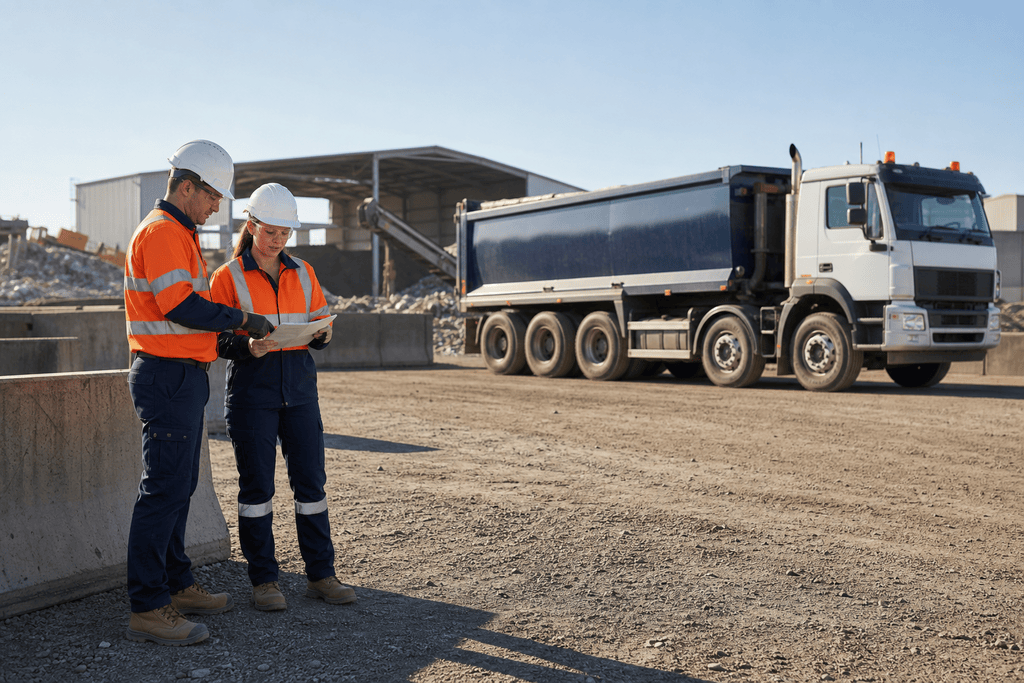
Moving construction waste should be a straightforward part of a project. In practice, delays often begin when the load details are unclear. A truck may be ready, the site may need material removed, and the project team may be working to a tight program—but the receiving requirements have not yet been confirmed.
The best time to clarify a construction waste load is before transport is booked or the material leaves the site.
Southern Cross Resources SA reviews enquiries for suitable masonry and construction-related materials across Adelaide and South Australia. Providing clear information at the beginning helps the team understand what is in the load, whether it may be suitable for recycling or disposal, and whether further review or an appointment is required.
Start with the material type
“Construction waste” can describe many different materials. A load might contain concrete, bricks, roof tiles, pavers, masonry products or a combination of materials. Bitumen and asphalt may also be involved on civil or demolition projects, but these materials should be confirmed before arrival and may require an appointment.
Avoid describing a load only as rubble, demolition waste or mixed waste. Instead, identify the main material and list anything else that may be present. If the material is uncertain, say so. Clear information gives the receiving team a better starting point than an assumption.
Confirm whether the load is clean or mixed
A clean, separated load is different from a load that contains several material types. Brick waste mixed with timber, concrete mixed with soil, or pavers mixed with landscaping material may require additional review.
Project teams should identify whether the load is:
- One separated material type
- Mostly masonry with small amounts of other material
- Mixed construction and demolition waste
- Potentially contaminated
- Uncertain and requiring assessment
Photos can be useful when the load is difficult to describe. A clear overview and a closer image of the material can help show its condition and composition. Photos do not replace final confirmation, but they can reduce unnecessary back-and-forth during the enquiry process.
Provide a practical volume estimate
The approximate volume helps qualify the job and determine the likely handling requirements. The estimate does not need to be perfect. Project teams can provide tonnes, cubic metres, truckloads, bin sizes or another practical measurement.
If the volume is not yet known, provide the best available estimate and explain what stage the project has reached. For example, the waste may already be stockpiled, or it may be expected to arise during demolition works over several days.
Include the project or site location
The site location can affect service availability, timing and project coordination. Include the suburb or full project address, together with any relevant access information.
Useful access details may include restricted delivery windows, traffic-management requirements, limited turning space, site inductions or other conditions that could affect the next step. These details should be raised early rather than after transport has been arranged.
Explain the required timing
“As soon as possible” may be understandable on a busy site, but a specific date or working window is more useful. State when the material will be ready, when it needs to be moved, and whether the timing is flexible.
If the enquiry involves multiple loads or work completed in stages, include the expected sequence. This helps the team understand whether the requirement is a single load, an ongoing project or a scheduled series of movements.
Raise documentation requirements before booking
Some project teams require dockets, load information or other records for internal reporting. If documentation is needed, mention it during the enquiry. Availability should be confirmed before the service begins so the project team understands what can be provided.
The same approach applies to any site-specific safety or compliance requirements. Do not assume these can be addressed after the load has moved.
A clear enquiry supports a clearer next step
Before sending a construction waste load, provide:
- Your name and company
- The project or site location
- The material type and load composition
- Whether the material is clean, mixed or potentially contaminated
- The approximate volume
- Photos, where available
- The required service and preferred timing
- Any access, safety or documentation requirements
This information does not automatically confirm acceptance. It gives Southern Cross Resources SA the practical details needed to review the enquiry and explain what should happen next.
If you are unsure about part of the load, include what you know rather than waiting for every detail to be finalised. The team can identify what further information may be required before booking or arrival.